Martin Zenker: “The essence of music is love, appreciation, and respect"
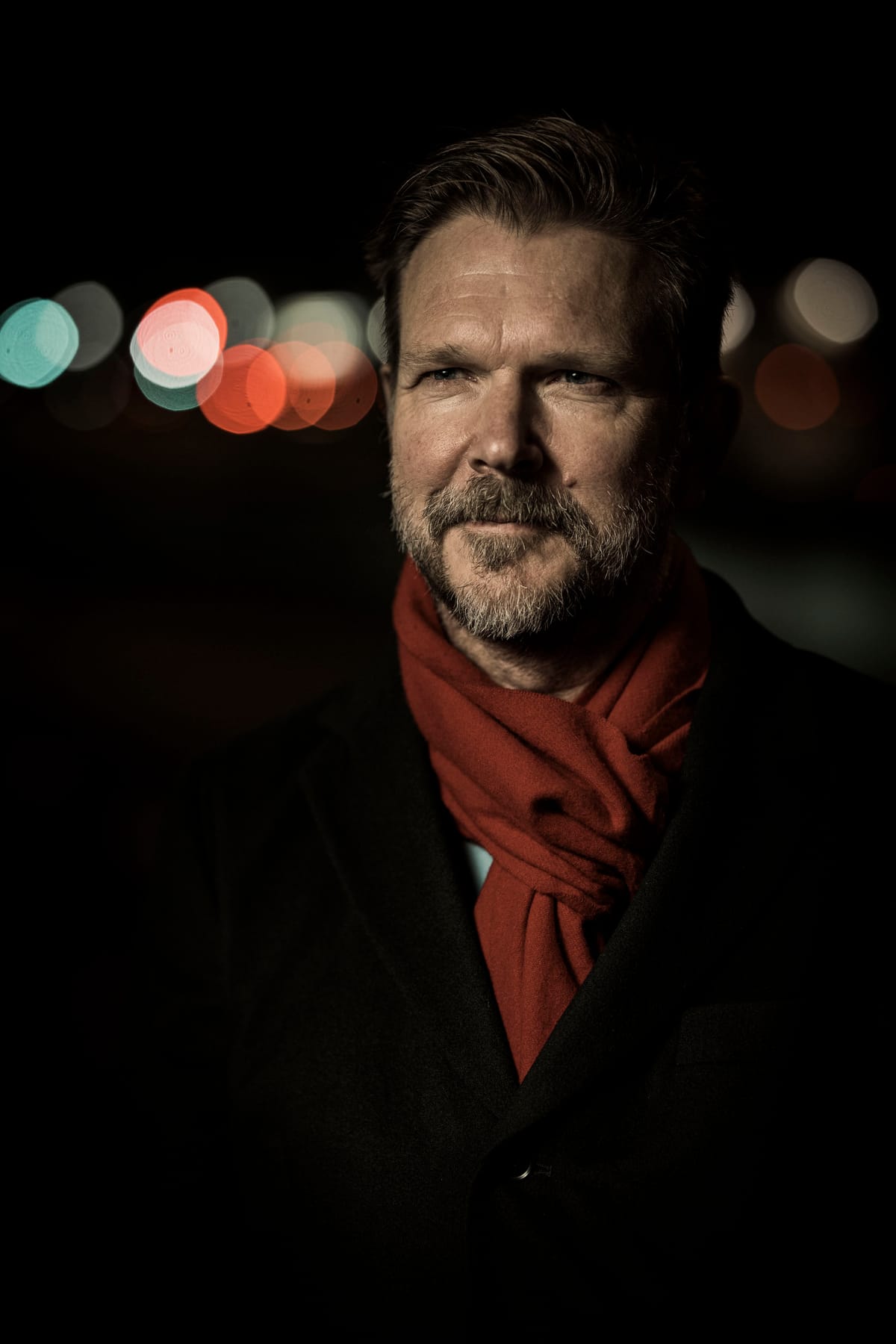
German jazz bassist Martin Zenker says you can't be a musician solely on talent and skill. Your character also plays a big role in your artistry. This mindset is probably the driving force behind Martin and his team who spent half a decade supporting jazz music and jazz education in Mongolia.
We met for our interview at the new Bird Jazz Club opened by one of his students, Khongor.T (co-founder of Fat Cat Jazz Club). We talked about the tough reality for musicians, endurance they need to overcome it and the principle that your work should be for yourself first, not the audience.
-Actually, how did your journey begin in Mongolia? We never discussed it before.
-In 2010, I was living in South Korea. I was a pretty dedicated long-distance runner. I still run. Not as crazy as back then when I used to run several marathons every year. In 2010, with a friend who wanted to do a serious challenge, we signed up for a 100 km ultramarathon in Lake Khuvsgul. It is called Sunrise to Sunset.
-Ah, yes.
- I checked out the jazz scene here. At that time, there were very few people. I met one of them. It was Ganbat from the Giant Steppes Jazz Festival, who founded UB Jazz.
Two years later, I got an invite to play at the Giant Steppes Jazz Festival with Martin Jacobsen, Paul Kirby, and Kim Minchan. We also did our first workshop in Khugjim Bujig. They loved it, and we did it again. In 2013 and 2014, we teamed up with the Goethe Institute to start jazz education in Mongolia. What we have been doing for the past 11 years started then. That’s how I started my journey here.
-How is this journey been continuing? What happened in the last few years?
-I came here in 2014 a bit naive, promising people that we would build a jazz music department here. In 2017, the Goethe Institute, one of our main partners, pulled out as it was planned between us. They had immense support for our project, for which we are always thankful.
We always felt like we had to be on our own more or less, that we had to find other partners. We had to strengthen our international relations. Although it was challenging, today we are very strong.
In 2018, my alma mater asked if I’d be a substitute teacher for my good friend, Paulo Cardoso. If you remember that name, he was here twice. He fell very ill and they asked me whether I could substitute for him. I had been doing that for six weeks. Unfortunately, he passed away. From 2018, I'm living two lives: Munich life and Mongolian life. I discovered my strength in international relations while working in Munich. Soon after, I took charge of the school’s international relations.
Now I'm involved in many projects worldwide; I was in Madagascar. I go to Brazil and South Africa once a year. Plus, Cuba, Canada, Singapore etc.
I spend one third of my time in Mongolia. I actually think it is where my home is. You can also say I spend my free time here. I'm an advisor for Khugjim Bujig College. I teach and try to support projects in Munich.
- Before our interview, we talked a bit about your time as a taxi driver when you were young. Young people who are studying tend to imagine that the master they look up to has reached this point without any obstacles.
-Check jazz history. The pianist McCoy Tyler worked as a taxi driver after John Coltrane died, with whom he toured all over the world. The drummer Elliot Zigmund, who played with Bill Evans also worked as a taxi driver. They all struggled and did other things. Everybody loves culture. But it is not supported enough. That’s why a lot of us have to do other things. It is the same for me. Indeed, I had my struggles. Until I was 30, I faced significant struggles. It turned a little better and it is good now, but I’m still struggling sometimes to manage other things I need in my life.
-Given this difficult situation of culture, do you need realism as a musician?
-Depends on what your goals are. I mean, in a way, you have to be very realistic. For example, I had my time working as a taxi driver. It is the same anywhere in the world with students. They're all like “I'm going to do this and I'm going to become a great musician.” And then reality hits some of them. They might end up as a taxi driver or say they can't do music anymore. Others go into commercial music or banking or something completely different. Reality will hit you at some point. Why? It's a fact of life.
There is another alternative. I've seen people my age who say, ‘actually, nobody recognizes my music. So, I do it only for myself. The world feels terrible, and I don’t even know who I am anymore. That’s the worst thing that can happen to a musician, in my view. Thus, you need strong optimism and strong trust in yourself. You should face reality and believe that you're one of the few lucky ones who can cope with reality.
"Reality will hit you at some point. Why? It's a fact of life. "
-What was your own way of coping with reality?
-Well, like I said, I was very naive when I was young. I believed I would make everything work out. Additionally, I was working really hard and taking a lot of risks because I was naive, but also very stubborn. That's the mixture of why and who I am. Other people do it with a lot of talent. Look at Enji. She's also working hard at the same time, very talented. On top of that, she was very lucky with the choices that she made. Now she has a big support team. It is wonderful to witness that.
-How did your family see your career as a musician, given its uncertain path?
-My family supported music, though jazz was not their primary focus. They supported my wish to become a musician once I demonstrated serious commitment. At first, I started playing violin when I was seven and later, I started playing bass. Then I said I wanted to become a professional musician and left school when I was seventeen. My parents didn’t like it. As I mentioned, things were difficult until I was 38. I was 21 when I started freelancing and touring a lot.
Of course, my parents loved me. But they always asked me how I saw my future and why I didn't try another career path. When I was 38, I became a professor in South Korea. Thereafter, my life became a bit more solid.
-You mentioned about running a marathon. Is there any correlation between being a long-distance runner and a musician? For example, Japanese writer Haruki Murakami wrote about relationship between writing and running.
-I receive that book as a present at least once every year for my birthday (laughs). But, yes, music is a way of expression, a way of passion, and a way of desire. It also has the element of achieving something. Sports have similarities. Language too has a lot of similarities. Running a marathon requires a lot of preparation. It isn’t something you do on emotion or because you want it. You need to practice. If you want to join an orchestra, you need to practice. If you want to be a good football player, you need to practice. It is the same with music.
"music is a way of expression, a way of passion, and a way of desire"
Running a marathon itself is the easy part. The hard part is going out every Sunday and running 40 or 50 km, which you do on your own. There is the same learning and practicing process. Like running music takes a lot of endurance. There is a bit of solitude and a bit of loneliness involved because there is only you.
-What do you try to express through your music when you play jazz?
-Myself. I can get philosophical about your question. I can say that I perform at places and I absorb influences, or I want to express the problems of the world. But I always think music doesn’t need an explanation because it should stand for itself.
"music doesn’t need an explanation because it should stand for itself"
What I try is to be as pure and unfiltered as possible while being part of the community called jazz. When you are in the conversation of four people, it is not about what you want to say or express. So, I want to make this group dynamic very clear that we can achieve the best outcome. This is how I see my role when I play jazz. Sometimes I play in a leading position and sometimes I follow the others. But I focus on the outcome and try to do the best I can.
Now, to be a bit more philosophical, I have been playing with Jessie Davis for 15 years. After our first concert, he talked about music, love, and energy, which he does even now. At first, I used to think that was so cheesy. But I understand now that it is the essence. The essence of music is love, appreciation, and respect.

-Is there any relationship between being a great human being and a great musician?
-There must be. Because the great musicians I played with were all great human beings. There are some special cases like Stan Getz, whom people said was not a great person. But all the greats I've played with, they were the humblest people. I mean, Billy Hart is a man with a huge reputation. He's done thousands of records working with Keith Jarrett. He is 30 years older than me. When we had our first concert together, at that time I was a nobody and he was a giant of music for me. Yet he came to me. He hugged me tightly and said, "Martin, thank you for helping me all night. I didn't get to see the arrangements." He didn't have to do that.
In my experience, great musicians often make good people. There are exceptions that sometimes, something distracts them, shifting their focus to other things. Along with that, their music usually suffers.
-As a musician, are there some things you should never allow to influence you?
-First of all, we should have an open mind. If you give me a moment, I’d say we shouldn’t let ego or negative feelings drive us. Solitude, loneliness. That's all fine. These emotions are fine. Don't build walls around yourself. Don't let others lead you in negative ways. Don't allow them in your music. It doesn't happen in the composing or arranging process. It happens on stage, for example, when you play with somebody you don't like; it's difficult to stay positive.
As a teacher, it's not my right to say to students, "avoid this or that." But I can only encourage them to be serious about what they do and to steer clear of shortcuts like AI.
Therefore, being honest and true to yourself is a must for me. I recommend not letting quick success blind you. Becoming the first prize of the universe, that’s like a flame that burns. I recommend staying away from these things. And rather finding what's in you.
-Who comes first for musicians? Is it you or the audience?
-You should come first to yourself. When a striker is going to strike on the football field, do you think he thinks about the audience? He doesn’t believe he will score this goal to make everyone happy and earn their love. It is the same for musicians.
When I'm on stage, it is nice to see people clapping. But I wouldn't have played worse or better despite the number of audience members there. It's not like we don't care. We care. But it doesn't influence what we do. We play as usual.
Sometimes, the audience goes wild for a high note. Then, the musician plays that note again and again. It is very shortsighted and not satisfying. It's show business. I love show business. Other people who choose that career become, for example, actors. If that makes them happy, very cool. Make sure you choose yourself first.
-Do you believe in success?
-I think there are different kinds of success. Financial success is important because we all have to live. For me, the biggest success is telling myself, “That was pretty good, and I liked it,” after a concert or recording. Often you don't go around the audience saying that you think you played well. Because you're super critical of yourself. John Coltrane hated his playing his whole life. Being able to say that you played up to your capacity pretty well is the biggest success for me.
-Was there a time when you felt unsure about your music career and thought of quitting?
-Looking back, I see that origin of my identity to this point is a mix of naivety and stubbornness about this job's reality. On top of that, I was always ready to suffer. I always thought, this is going to work out. When I came to Mongolia, I knew nothing about the country. I made a promise that we were going to open a jazz department here. That was naive. Because of my stubbornness, my mentality was that we would fight until we succeeded. Giving up was never an option. Do I have doubts about my musicality? Yes, all the time. I don't show them to the audience. No one wants to see an artist that says, I'm not sure what I'm doing. You don't want a chef in the kitchen who expresses doubt about their cooking skills.
-Do you love being a teacher?
-Absolutely. Actually, until I was asked to become a professor in Korea; I didn't consider teaching. I used to think there are those who can do it, and those who cannot. Today I like teaching. I'm involved in many teaching communities, groups, and organizations. But I don't see myself as a teacher. I view myself as somebody who has a bit more experience and is trying to open doors to these young people. You wouldn’t hear from my students that I told them something like "No, you can't do it like that." Because I always say, "Make sure you like what you do.”
I don't see myself as a teacher. I view myself as somebody who has a bit more experience and is trying to open doors to these young people. You wouldn’t hear from my students that I told them something like "No, you can't do it like that." Because I always say, "Make sure you like what you do.”
-What is discipline for someone who teaches?
-That’s good question. I learned it from running and practicing that to achieve something, you have to prepare. There are no shortcuts to it. Some people have more talent. But to reach higher, they still need discipline.
Yet discipline shouldn't turn into something negative or an obsession. Preparing for something, a great concert, or a big band arrangement isn't fun all the time. That's hard work.
That's why you should always strive toward a good outcome. Don't think that you've done your job and that’s all. Make sure you are proud of it. When you lose that kind of motivation for your work, discipline can become negative.
In that way, I don't see myself as a teacher. But I see the outcome of my work. For example, Enji and the guys all over the world who became killer musicians, and I always hope they have a good life. Seeing that is beautiful and very rewarding.
-Who were teachers that had influence on you?
-When I was younger, there were teachers who had a formative influence on me as a musician. I graduated in classical music. I was training to be an orchestra player. My classical teacher was a great mentor for me. I'm forever thankful for that.
In the context of music, i.e., remaining a decent human being in jazz, it is the drummer, Billy Hart. 100% for sure. He worked with Miles Davis. He worked with everybody. He's now 84 years old and still playing. He taught me how to remain a decent human being in this music with hope. I wish everybody had this experience. Also, the drummer Rick Hollander who was here a couple of times. He was a very big mentor for me. He showed me that a composer must be straightforward and never compromise in a visionary way. Charlie Mingus is also a huge influence for me. I work on his music all the time.
-How is playing his music?
-First of all, every time I do it, it's an honor. I've listened to his music since I was a teenager. Every time I play his music, I tell myself that I'm glad he's not hearing me. I know it's a ridiculous thought.
He conceptualizes his music in a way that gives the bass so much power to drive it. As a bass player, you always feel a little bit like the captain of the ship, because you're the man in the back. More or less, those things in front of you control you. But in his music, it's a lot of fun. I love it, and I've been working on it for many years. Before this interview, I fixed some charts. In a few weeks, I'm going to attend seminar on his music, in Canadian university. I have 600 pages book of his arrangements.
-The word creativity is so widespread in today’s world. Is it actually used by musicians?
-I think I have to approach this question from a few different angles. First of all, you should never forget about the purpose of what you're doing. What is the purpose? It is to meet yourself first so that you can touch other people's hearts. If you don't like what you do, then nobody will like it. After that, creativity can come in. Creativity in technicality, musicality, etc.
Skills can't touch your heart on their own. This is what I mean when I say, never forget the purpose of why you express yourself. There are many cases where you don’t have to be creative with ambition. If you look at James Brown's bands, the bass player plays one riff over and over. He doesn't have to be creative. His job is to lay it down and be solid. So be careful because your creativity depends on the job and the purpose.
"First of all, you should never forget about the purpose of what you're doing. What is the purpose? It is to meet yourself first so that you can touch other people's hearts"
It's also important to push your creativity while you practice to explore. You can try a new harmonic concept or things that you have never tried before to open your horizons. Don’t forget to make sure you like it. If you're aiming for something new, skip it. Also, don't bother if you're bored with what you do! Jessie Davis said something very smart about it in a workshop. A student asked him how to find your own voice when you play. He answered, ‘I play whatever comes to my mind. When I play next time, I try to leave out the things that I didn't like. At last, it will distill down to things you like.’
Although it sounds very simple, many people have no idea how hard it is to find things you like about what you are doing. But that's the essence. Because if you don't like it, why will somebody else like it? As I said before, success is when you kind of like what you play, which happens only sometimes.
-So, tell us about the big project you and Mandukhai are preparing.
- In addition to the program and school, we have an organization called Jazz Lab. Mandukhai leads it. We are both members of the IASJ, which is the International Association of Schools for Jazz. We are on the executive board, which has seven members. The organization has around 150 or 200 partner schools worldwide. They have an annual meeting. Three years ago, they held it in New York. After that, it was in Helsinki. This year, it was in Austria.
As for 2026, Mandukhai and I are planning to organize this conference in Mongolia. We expect 100 musicians from around the globe. This group will include professors, students, teachers, and educators. It's the world's most important conference about music and especially jazz education. There were two rounds of stages to apply for it. Two years ago, we applied for the first one and came to the next round, and last July, we applied again. The general assembly approved the organization’s first meeting in Asia and Mongolia.
-What would be your last word for young musicians?
-Widen your horizon in a different direction. Research deeper on where stuff comes from. Go further ahead of what you want. Jazz music has a history of more than 100 years. It seems for Gen Z, everything starts in 2020. They don't know what happened before 2020 except for very few exceptions. They think a lot of stuff that they do is new, but it's not new. People have been doing it for a very long time, like how fashion repeats itself.
In jazz, it's hard to come up with something new. Generally, the music industry gives you so much pressure to always come up with something new. Contrary to that, we don’t have to reinvent jazz every two weeks so that people have something to write about. If you realize what has been there before, it takes a lot of pressure off. Once you realize that you don't have to do anything and you can be yourself, it's a huge relief. That's why it's important to explore the past. Additionally, today’s generation has more opportunities. Because everything is out there. Still, it takes structure, patience, and endurance. You need to do something that satisfies you. Otherwise, you won't become a happy musician. You won't have a happy life.